
Igor Soglaev pleaded guilty after driving drunk in a crash that killed mother-of-two Patcharee Boonrod. Twenty-six days after her death, he received a prison sentence — and the court suspended all of it. Her family alleges money and intimidation influenced what happened.
According to our journalist research, at 6:39 p.m. on 17 January 2019, a white Toyota Fortuner with red temporary plates left a trail of wreckage across northern Phuket. Eyewitnesses to the crash told our crime journalist that the SUV struck motorcycles and several cars while travelling from the back road in Choeng Thale toward the area outside Sunwing Hotel. It was finally cornered near a taxi rank. The crash killed Patcharee Boonrod, a local restaurant worker and mother of two.
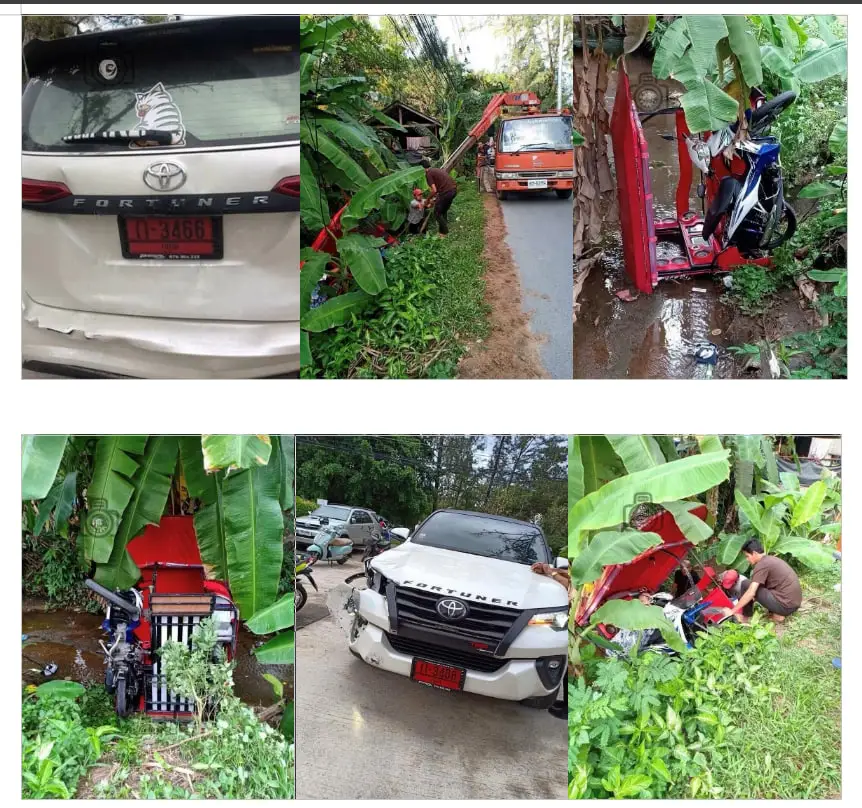
The court judgment describes the sequence behind that wreckage. It states that Soglaev was driving at high speed with a blood-alcohol concentration recorded as 184 mg%, an equivalent of a bottle of vodka. As he approached a sharp, sloping bend, he crossed the solid yellow center line into oncoming traffic. The Fortuner struck Patcharee's motorcycle. She suffered serious injuries and died.
But the vehicle did not stop. According to the judgment, Soglaev continued at speed and hit a motorcycle parked by the roadside, then collided with a minibus and another motorcycle travelling on the road. He left the scene without stopping to assist the injured, identify himself or immediately report the crash.
Photographs provided by eyewitnesses to the crash and members of Patcharee's family capture the violence of what happened. The Fortuner, bearing temporary Phuket registration number 3466, had extensive damage to its front-right corner. A blue-and-white motorcycle lay tangled beside an overturned red three-wheeled vehicle in a roadside drainage channel. Recovery workers moved among banana plants and dense vegetation to pull the wreckage out.
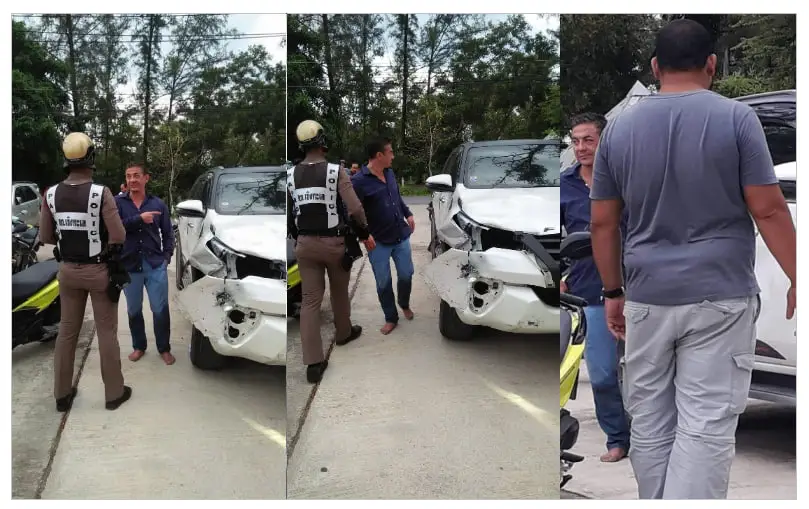
In other photographs, a barefoot man in a dark-blue shirt stands beside the smashed SUV, speaking with an officer whose vest identifies Choeng Thale Police Station. At the time, the news report described the driver only as a heavily intoxicated Russian tourist.
Eyewitnesses identified that man as Igor Soglaev. Their identification is consistent with a Phuket Provincial Court database entry naming Soglaev as the defendant in a fatal crash prosecution arising from conduct on the same date and in the same area. One eyewitness told our journalist that the Fortuner had hit his three-wheeler and thrown it into the canal.
Soglaev was no ordinary tourist. He was a wealthy Russian businessman and former oil-industry executive. Public records place him at the head of the SANORS petrochemical group, in management roles at oil companies and on Pirelli's board. The imbalance could barely have been greater: a man of wealth and corporate stature behind the wheel, and a local restaurant worker whose family had no comparable power.
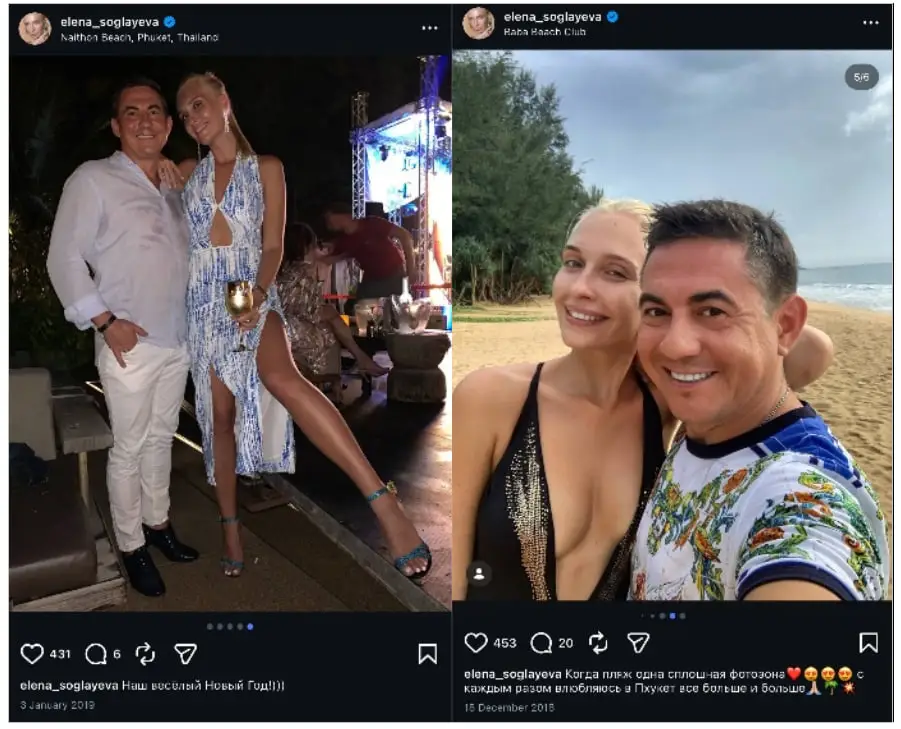
The collision came in the middle of what his wife's verified Instagram account portrayed as an extended luxury family holiday. The public feed presented nearly two months of resorts, sunsets, beaches and family life around the week in which Patcharee was killed.
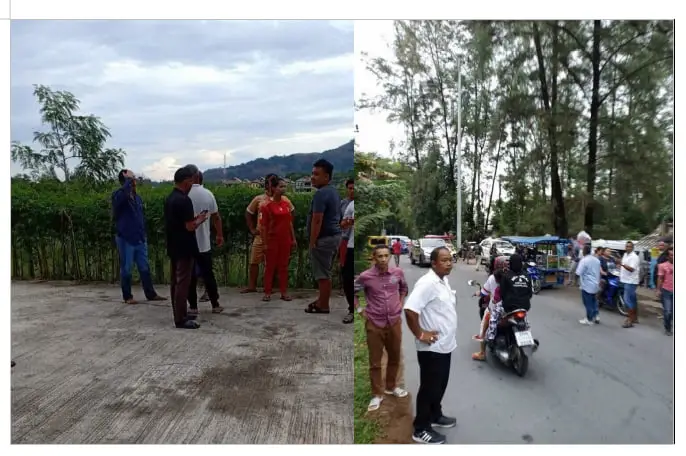
Eyewitnesses to the crash interviewed for this report describe an even darker scene on the road. They say Soglaev was already under the influence of drugs, as well as alcohol, when the Fortuner struck the vehicles. After the SUV was stopped, they say, he ran barefoot from the road into a rice field.
The court later established that Soglaev drove while intoxicated. The relevant court entry does not include a drug charge. The account that he was under the influence of drugs during the crash, and that he fled into the rice field immediately afterward, comes from eyewitnesses to the crash interviewed by our journalist.
According to those witnesses, this was not a single drunken collision followed by remorse and responsibility. It was a destructive journey through local traffic, followed by a barefoot flight into a field while victims and wrecked vehicles were left behind.
In the aftermath, eyewitnesses say, Soglaev threatened local residents who had seen what happened. In interviews for this report, they said he invoked what he presented as connections to the "Russian mafia" and to "important people."
Seven years later, the local residents interviewed for this report say they remain horrified by memories of that road Armageddon. For them, it was not simply a traffic accident but an evening of smashed vehicles, a driver fleeing into a field and threats directed at those who had witnessed it.
The crash left two images. One is public and immediate: torn metal, a motorcycle in a drainage channel and a barefoot man beside a smashed SUV. The other is quieter and more enduring: a son and daughter confronting the empty place where their mother had been.
The Phuket Provincial Court entry records that a person died. It does not name Patcharee.
Her family does.
Patcharee Boonrod, born in 1972, was the mother of a son and a daughter and worked as a cook in a local restaurant. Her family says she lived simply and had none of the resources that can turn private grief into public influence.
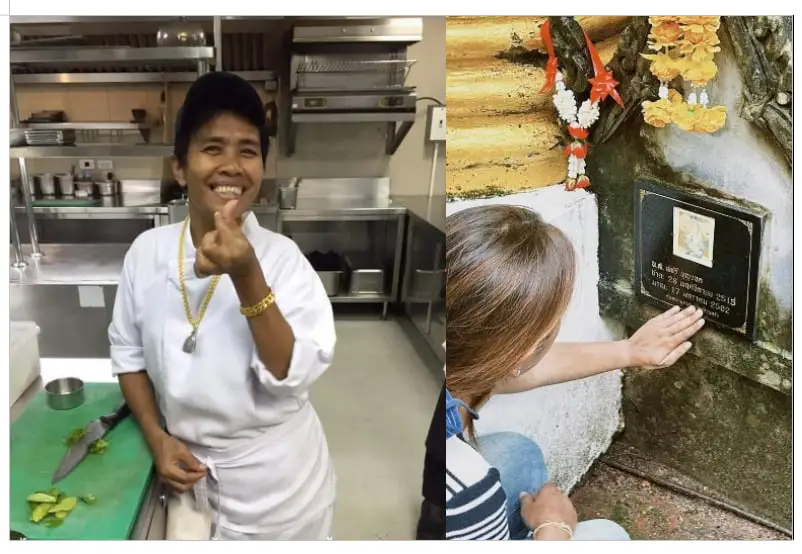
Photographs and messages provided by witnesses show the human cost that disappears inside legal language. One image, dated 18 January, the day after the crash, showed a badly damaged red Honda scooter. In another, dated the following day, a young woman stood beside funeral flowers and a framed photograph of Patcharee.
"We must stay strong. Mum can now be at peace," one accompanying Thai message read.
Years later, another family message carried an even shorter line: "I miss you so much."
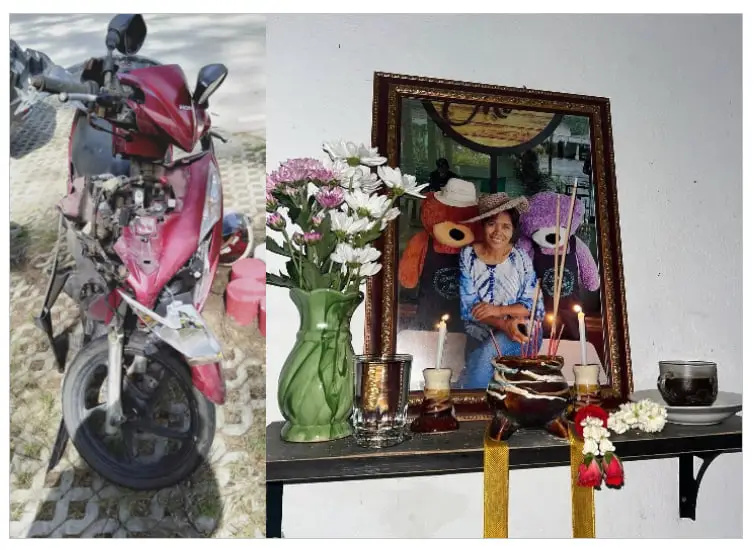
For outsiders, 17 January 2019 may be little more than a date in a court database. For Patcharee's children, it divided their lives into a time when their mother was present and everything that came after.
Patcharee's death did not end when the traffic cleared and the wreckage was removed. It entered the lives of her children and stayed there. Phuket sells an image of villas, beaches and effortless escape, but that image is sustained by local workers like Patcharee. Her life may have been ordinary, but its value was not smaller. The pain of losing it was not cheaper.
Patcharee's husband, Somboon Keawsopak, also worked as a cook. Relatives say the loss of his wife and the alleged threats from Soglaev had a devastating psychological effect on him. He died in 2024 at just 54, leaving the couple's son and daughter without either parent. His death is another part of the family's suffering, but could Soglaev have had a hand in such an untimely death? Some relatives suspect that Somboon may have been poisoned and have questioned whether Soglaev could have played a role. The alleged threats and references to powerful Russian connections have only deepened their fears, particularly given the history of poison being used in operations attributed to Russian security services.
Relatives say both children were intimidated after the crash. They say the pressure frightened them and constrained their ability to challenge the handling of the case.
If grieving children were frightened into silence, the imbalance did not end with money or status. It reached into their ability to question the process, resist pressure and seek justice.
Patcharee died on 17 January. According to the court database, the Phuket Provincial Public Prosecutor's case was accepted on 12 February, and judgment was recorded that same day. Just 26 days separated the fatal crash from the judgment.
The prosecution alleged intoxicated and dangerous driving causing death, along with failure to stop, provide reasonable assistance and notify the authorities.
Soglaev pleaded guilty.
The court's combined starting punishment was five years and two months in prison and an 82,000-baht fine. Because of the guilty plea, the punishment was reduced by half, to two years and seven months in prison and a fine of 41,000 baht.
Then the court suspended the entire prison term for two years. The custodial sentence existed, but its execution was suspended. The materials reviewed do not establish whether Soglaev spent any time in custody before judgment.
The court entry says Soglaev had adequately compensated the victim's family and should receive an opportunity to reform and become a law-abiding citizen.
That phrase, "adequately compensated," carries enormous weight. Yet the relevant entry does not identify who received the money, state the amount or describe the agreement. It does not say who negotiated it or show whether Patcharee's son and daughter freely accepted the arrangement.
For a family that says its children were intimidated, those omissions are explosive. Who spoke for Patcharee? Were her children in a position to approve or refuse what was done in their mother's name?
The court entry gives no answer.
Compensation may cover funeral costs, damaged property or immediate bills. It cannot return a mother to her children. Yet the language of satisfaction helped support a decision that offered Soglaev the possibility of reform while leaving Patcharee's family with a permanent loss. Without the agreement or the voices of those affected, a tidy legal phrase stands where a human explanation should be.
The family says he bought his freedom.
Patcharee's relatives do not see compassion in this sequence. They see a transaction. They allege that Soglaev paid police and court officials so that he would not serve a real prison term. Eyewitnesses to the crash interviewed by our journalist make the same central allegation. They connect the alleged payments to a process that moved from a fatal crash to a guilty plea and fully suspended sentence in less than four weeks.
Relatives say Soglaev's wealth and connections made the difference. In their account, paying his way out of a Phuket prison term was an affordable transaction for a wealthy Russian businessman. Patcharee's family could not buy influence. Her children paid a price no amount of money could undo.
The relevant court record cannot answer the corruption allegation. It does confirm the surrounding facts that have fueled it: a process lasting 26 days, compensation whose recipient and amount are not identified in the entry, and a custodial sentence suspended in full. The same record that calculates Soglaev's punishment in months and baht leaves Patcharee unnamed and her family's role unexplained.
To her relatives, these are not separate mysteries. They form one picture: a process that closed around the defendant while the people who buried a mother were left outside it. Their accusation is that money achieved what grief, truth and an ordinary family's demand for justice could not.
One side buried a mother. The other was given a second chance.
The central question is brutally simple. Did Soglaev remain free because the law honestly judged suspension appropriate, or because money and intimidation bent the process in his favor?
If the family's allegation is proven, this was not leniency. It was justice sold.
Four years after the fatal crash, the same verified Instagram account again portrayed the Soglaev family on holiday in Phuket. A photograph dated 13 January 2023 shows Soglaev smiling beside his wife at a tropical resort. Other posts in the sequence are geotagged Phuket, show his wife on the beach and celebrate "the sun, sea and freedom." Taken together, the posts indicate that Soglaev had returned to the island.
There is no evidence that Soglaev's wife or children knew about the crash, and nothing in these posts establishes that they knew what happened to Patcharee. The point is not to assign responsibility to them. It is what the images reveal about Soglaev's life after the judgment.

Patcharee's children were left without their mother. The man who pleaded guilty in the case arising from her death remained free to return to Phuket for another luxury holiday, stand beneath the palms and pose for smiling family photographs.
To Patcharee's relatives, that return appeared almost unimaginably callous. Whatever remorse Soglaev may or may not have felt, the public picture was of a man back in the same area for pleasure, smiling beside his family as if the woman killed by his driving and the family left behind belonged to someone else's story.
One family returned to the island for another holiday. The other could never return to the life it had before 17 January 2019.
Soglaev's conduct should not be allowed to define the many Russian tourists who visit Thailand peacefully and respect its people and laws. Yet one wealthy offender, brazen in his conduct and spared from serving the prison term imposed by the court, can cast a long and unfair shadow over all of them.
Seven years later, the public court entry still names the defendant but not Patcharee. It records charges, a guilty plea, a fine, a prison term, compensation and suspension. Her children are left with the name it omitted and the questions it did not answer.
The institutions that handled this case owe them more than a database entry.
They owe them the truth.
Source: MiceTimes.Asia
Leave a comment
Note:
This comments section is meant for individuals to express their opinion or share experiences in a way of a review.
Comments which are posted from fake email accounts, contain rude, intentionally defamatory information, obviously false information or hate speech may be deleted, according to our Comments & Take Down Policy.
By posting a comment or question, you will not automatically be notified when other people respond to your post (as in some other social media message threads). Please check the thread yourself if you’re interested in this topic.




©2026 chiangmailocator.com. All rights reserved. Powered by annuaire SEO.